

Free DMARC Scan—See If Your Domain Is Vulnerable
DMARC (Domain-based Message Authentication, Reporting and Conformance) stops hackers from sending emails that look like they came from you. Protecting your customers, your domain reputation, and your brand with a single DNS record.
Without DMARC, anyone can impersonate your domain. One spoofed email to the wrong person can trigger a compliance violation, erode customer trust, or land your domain on a blacklist overnight.
 Gain Visibility. Reduce Risk.
 Gain Visibility. Reduce Risk.
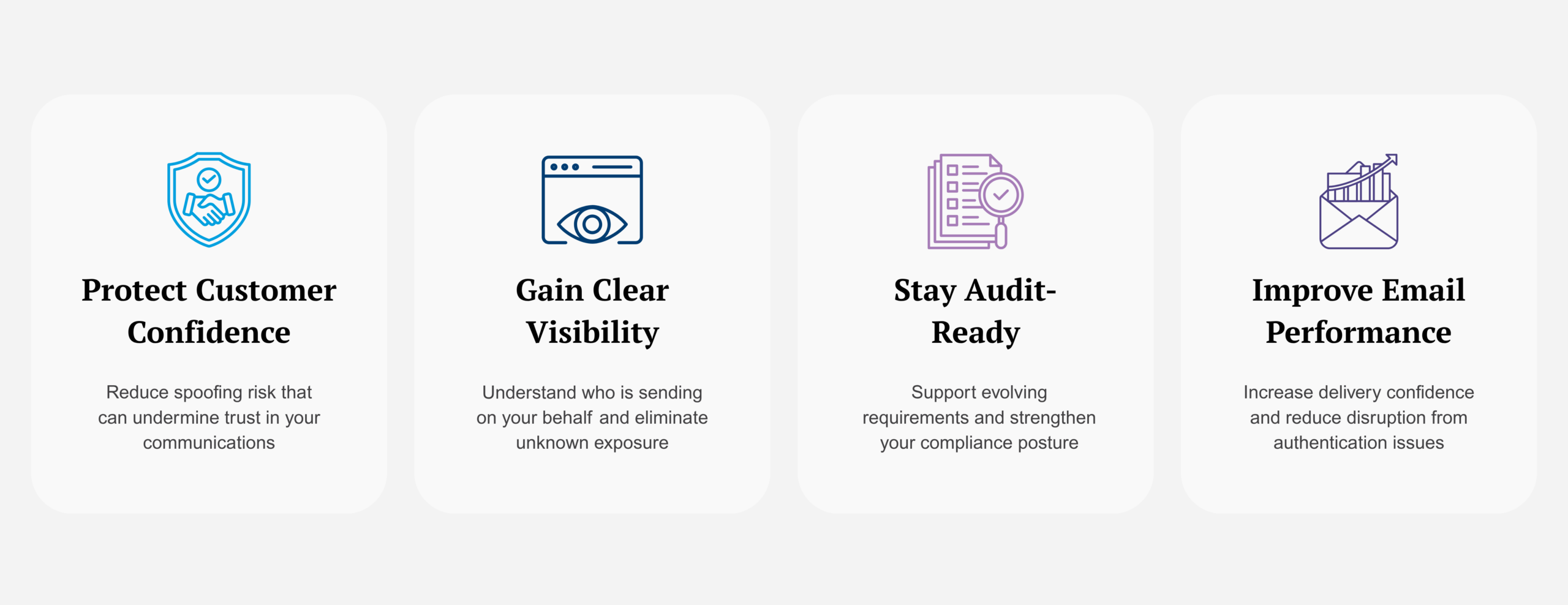
Understanding how your domain is being used is the first step toward protecting it. A DMARC scan helps uncover authentication gaps, unauthorized senders, and other hidden risks, giving you greater visibility, stronger protection, and more confidence in your organization’s communications.
Fill out the form to receive a complimentary report showing how your domain is being used and what to review next.
Protect More Than Just Email
Get a Clear Picture of Your Email Environment
A DMARC scan is a simple way to gain visibility into your current email authentication posture.
It can help identify:
- Whether a DMARC record is published for your domain
- Whether SPF and DKIM are properly aligned
- Whether unknown or unauthorized senders may be using your domain
- Whether gaps exist that could impact deliverability or increase risk
This level of visibility is often the first step toward strengthening domain protection.

How DMARC Works
DMARC builds on existing email authentication standards to help you understand and control how your domain is used.

Email authentication is verified
Checks that the sender is authorized and the message is valid, helping confirm the email is coming from a trusted source and has not been altered.

Domain alignment is evaluated
Confirms the sending domain matches your “From” address, helping determine whether the message truly represents your organization.

Your policy is applied
Tells receiving servers how to handle failed messages—whether that means allowing, flagging, or rejecting them.

Activity is reported back to you
Shows who is sending on your behalf and how messages perform against authentication checks over time, helping uncover unknown senders and identify gaps that may need attention.
Free DMARC Scan FAQs
What is a DMARC record?
A DMARC record is a DNS entry that tells receiving mail servers how to handle emails that claim to come from your domain but fail authentication checks. It works alongside SPF and DKIM to help prevent unauthorized senders from impersonating your organization. Without a DMARC record, someone may be able to send emails that appear to come from your domain without a technical barrier stopping them.
What does a DMARC scan check?
A DMARC scan checks whether a DMARC record is published for your domain, whether your SPF and DKIM records are correctly configured and aligned, what enforcement policy is currently in place, and whether unknown or unauthorized senders may be using your domain. The result gives you a clearer picture of where your email authentication stands and what needs attention.
Why should a business care about its DMARC policy?
Your DMARC policy helps protect your business from email impersonation. If your policy is too weak, scammers may be able to send emails that look like they came from your company, putting your customers, employees, vendors, and reputation at risk. A DMARC scan shows whether your domain is only monitoring those threats or actively helping block them.
What happens if I do not have DMARC set up?
Without DMARC, your domain may be more vulnerable to spoofing and phishing attempts because unauthorized senders can try to send messages that appear to come from your domain. You also have less visibility into who is sending email on your behalf. A missing or weak DMARC record can also affect email trust and deliverability.
How long does it take to implement DMARC?
Adding a basic DMARC record can take just a few minutes. Moving safely to full enforcement, such as p=reject, often takes four to twelve weeks. That time is typically spent reviewing reports, identifying legitimate senders, and making sure SPF and DKIM are correctly configured before tightening the policy.
Is this DMARC scan really free?
Yes. The DMARC scan is free with no obligation. Fill out the form and Secur-Serv will send you a report showing your domain’s current DMARC configuration, any authentication gaps found, and recommended next steps. There is no software to install and no credit card required.